Dreaming about owning a place in Mission Beach that works as both a coastal getaway and an income-producing property? It is an exciting idea, but in this market, buying a vacation rental takes more than finding a home near the sand. You need to understand local property types, short-term rental rules, taxes, and the day-to-day realities of operating in one of San Diego’s most tightly regulated beach communities. Let’s dive in.
Why Mission Beach Draws Buyers
Mission Beach has a strong coastal identity that continues to attract both visitors and buyers. The area is a narrow sand-bar peninsula about two miles long, with the ocean on one side and the bay on the other, and the City of San Diego describes it as the most densely developed residential community in the city. That combination of beach access, visitor appeal, and compact development is a big part of what makes it stand out.
It is also a place with steady tourism exposure. The city notes that Mission Beach draws large summer crowds to its shoreline and Belmont Park, while the San Diego tourism authority reported 32.5 million visitors in 2024 and county hotel occupancy averaging 74.2%. According to the tourism authority’s July 2025 lodging forecast, occupancy was strongest in Q3, which supports the idea that beach rental demand is highest in summer and around major holiday periods.
Know the Housing Mix
One of the biggest mistakes buyers make is assuming Mission Beach is a simple condo market. It is not. According to the city’s planning information, the community includes detached homes, attached homes, duplexes, small multifamily buildings, and mixed-use properties.
Current SANDAG housing estimates for the Mission Beach Community Planning Area show 3,629 housing units, including 571 detached single-family homes, 1,279 attached single-family homes, and 1,779 multifamily units. The city also notes that small-area estimates can have a material margin of error, but the broader takeaway still matters: inventory is varied, and property type can affect both your use options and your long-term strategy.
Zoning Matters More Than You Think
In Mission Beach, a great-looking property is only part of the story. The exact parcel matters because the community is organized under Mission Beach Planned District zoning, with residential, neighborhood-commercial, and visitor-commercial subdistricts. What you can buy, improve, or operate depends heavily on that zoning, along with lot size and building form.
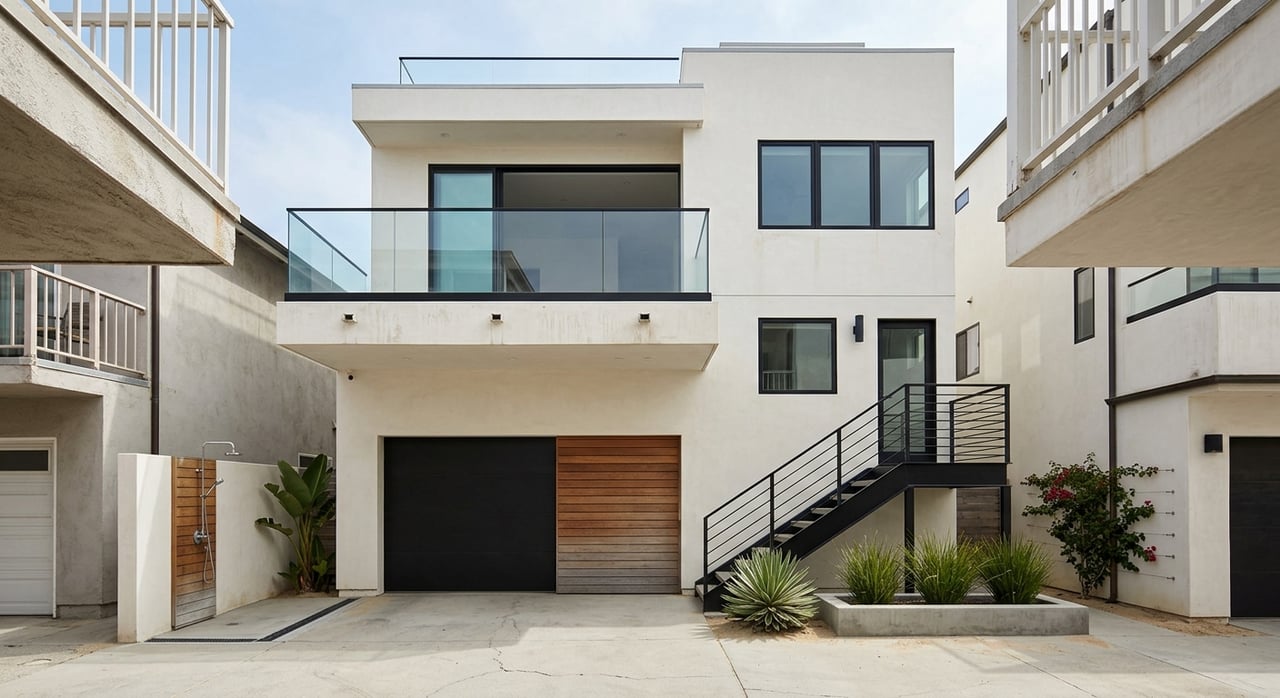
The city’s planning documents describe Mission Beach as a place of very small lots, courts and places, narrow north-south streets, and strict bulk controls. There is a basic 35-foot, three-story framework and tighter parking ratios than many inland neighborhoods. For buyers, that means access, parking, density, and usability can vary a lot from one block to the next.
If you are comparing two homes at similar price points, one may be much easier to operate than the other simply because of its location, parking setup, or zoning context. That is why a property tour should always be paired with zoning review and use analysis.
Understand the Short-Term Rental Rules
If you plan to rent a property for stays of less than one month, San Diego treats that use as short-term residential occupancy, or STRO. In Mission Beach, whole-home short-term rentals fall under Tier 4.
As of April 10, 2026, the city’s STRO program page shows that the Tier 4 application period is closed, with 1,097 licenses issued and 0 remaining. The city also states that a host may hold only one STRO license and that licenses are not transferable between owners or properties.
That point is critical if you are buying a current vacation rental. A seller’s setup does not automatically transfer to you after closing, even if the property has a history of short-term rental use. You should evaluate the property based on current rules and your actual path to legal operation, not on marketing language in a listing.
Key Operating Requirements to Budget For
Before a host can even apply for an STRO license, the city requires an active Transient Occupancy Tax certificate and an active, paid Rental Unit Business Tax account. If the host is not the owner, the city also requires a business tax certificate and proof of the right to occupy and sublease.
The city also states that accessory dwelling units may not be used for STRO. For Tier 3 and Tier 4 licenses, hosts must maintain at least 90 days of STRO use each year and file quarterly reports. Guest stays in Tier 3 and Tier 4 also require a two-night minimum.
For budgeting, the current Tier 4 fee schedule includes a $41 application fee and a $1,129 license fee, with licenses expiring every two years. These are not huge line items compared with purchase price, but they still belong in your underwriting.
Factor in Taxes Early
Your pro forma should include taxes from the start, not as an afterthought. San Diego’s transient occupancy tax changed effective May 1, 2025 to zone-based rates of 11.75%, 12.75%, or 13.75%, and the exact rate depends on the property’s location in the city tax-zone lookup system. The city requires TOT to be remitted monthly.
The city also says that owners who rent all or part of a residential property for more than six days in a calendar year are responsible for Rental Unit Business Tax. For a single-family or condominium rental parcel, the current fee is a $50 base fee plus $5 per unit.
Property taxes matter too. According to the San Diego County property tax FAQ, property tax is primarily based on assessed value, and the tax rate consists of the 1% Proposition 13 rate plus voter-approved bonded debt rates. If you are evaluating cash flow, all of these costs need to be included together.
Expect Seasonal Demand
Mission Beach is not typically a flat, year-round income story. The safer assumption is a summer-weighted pattern, with stronger performance in late spring, summer, and holiday periods, and softer occupancy in shoulder seasons. That inference is supported by city beach-use information and the broader tourism authority lodging pattern, even though it is not a Mission Beach-specific STR revenue study.
For you as a buyer, that means conservative underwriting matters. It is smart to model realistic summer demand, then stress-test your numbers for slower months, shorter booking windows, and weekend-heavy occupancy. A property can still be attractive, but it should work on disciplined assumptions rather than best-case projections.
Build a Smarter Pro Forma
A Mission Beach vacation rental should be evaluated as both a lifestyle asset and an operating business. Your model should include more than just mortgage, rent, and HOA dues.
At a minimum, account for:
- Nightly rate assumptions
- Seasonal occupancy patterns
- Minimum-stay rules
- Cleaning turnover costs
- Management fees
- Platform commissions
- Utilities
- Furnishings
- Maintenance reserves
- Insurance
- HOA dues, if applicable
- STRO fees
- TOT
- Rental Unit Business Tax
In a coastal location, extra reserves are especially important. The city’s coastal planning materials flag issues such as wave erosion, loss of beach area, parking congestion, and compatibility concerns along the bayfront. Older low-rise properties near the ocean or bay may also need more ongoing attention due to sand, salt air, and corrosion.
What to Check Before You Make an Offer
A vacation rental purchase in Mission Beach calls for careful due diligence. The right checklist can help you avoid buying a property that looks promising online but does not fit your intended use.
Here are some of the most important items to confirm:
- Verify the parcel’s exact zoning and planning area through the city’s Mission Beach zoning information
- Confirm whether your intended use is home-sharing or whole-home STR
- Do not assume an existing short-term rental setup or license transfers with the sale
- Review guest parking in practical terms, not just on paper
- Underwrite occupancy conservatively with summer-heavy assumptions
- Confirm the applicable TOT zone rate and monthly remittance requirements through the city’s TOT page
- Review annual compliance costs, including business tax and licensing fees
- Evaluate coastal maintenance exposure, especially for oceanfront, bayfront, or older properties
If the property is a condo or townhome, you should also review HOA documents carefully. Use restrictions in CC&Rs can be just as important as city rules.
Questions to Ask Your Agent
The best Mission Beach purchases usually come from asking sharper questions early. Instead of focusing only on list price and projected income, make sure the conversation covers real operating feasibility.
Some of the most useful questions include:
- Does this parcel have a realistic path for my intended rental strategy under current STRO rules?
- If this is a condo or townhome, what do the HOA rules allow?
- How usable is the parking for guests on this specific block?
- What occupancy assumptions are realistic for this micro-location in summer and shoulder season?
- What are the full annual compliance and tax costs?
These questions can save you from overpaying for a property based on an income plan that is not practical under current rules.
The Bottom Line on Buying in Mission Beach
Mission Beach can absolutely be appealing if you want a property with strong coastal visibility, year-round lifestyle value, and visitor demand. But it is not a plug-and-play Airbnb purchase. The area’s housing mix, narrow lots, parking limitations, tax obligations, and highly restrictive whole-home STR framework make due diligence essential.
If you are considering buying a Mission Beach vacation rental property, the smartest move is to approach it with both lifestyle vision and investor discipline. That means analyzing zoning, use rules, carrying costs, and realistic seasonality before you write an offer. If you want a local, hospitality-driven team to help you evaluate the numbers and the neighborhood fit, connect with The Sirin Daum Group.
FAQs
Can you buy a Mission Beach property and automatically keep the seller’s short-term rental license?
- No. The City of San Diego states that STRO licenses are not transferable between owners or properties.
What kind of short-term rental license applies to whole-home rentals in Mission Beach?
- Whole-home short-term rentals in Mission Beach fall under Tier 4 in San Diego’s STRO program.
Is the Tier 4 short-term rental license currently available in Mission Beach?
- As of April 10, 2026, the city’s STRO page shows the Tier 4 application period closed, with 1,097 licenses issued and 0 remaining.
What taxes should you budget for when buying a Mission Beach vacation rental property?
- You should budget for transient occupancy tax, Rental Unit Business Tax, property taxes, and any applicable license-related costs.
Why does parking matter so much for a Mission Beach vacation rental property?
- Mission Beach has narrow streets, small lots, and tighter parking standards, so practical guest parking can affect both usability and rental appeal.
What should a Mission Beach vacation rental pro forma include?
- At minimum, include nightly rate, seasonal occupancy, cleaning, management, platform fees, utilities, furnishings, maintenance, insurance, HOA dues if applicable, STRO fees, TOT, and Rental Unit Business Tax.